Table of Contents – Introduction – Why Spray Foam Outperforms Other Options – Open-Cell vs Closed-Cell – Buildings That Benefit Most – Cost Tiers & ROI Comparison – Customer Results – Get Started – FAQ & Conclusion
Introduction to Commercial Spray Foam Insulation Houston TX
Commercial spray foam insulation Houston TX building owners need is unlike anything required in a mild climate. Houston’s heat, humidity, and extreme weather demand more than standard insulation can deliver.
Houston sits in Climate Zone 2, one of the hottest and most humid in the country. As a result, commercial buildings here work harder to stay cool. HVAC systems run longer and energy bills climb fast.
Why Houston’s Climate Makes Insulation Critical
Houston averages over 100 days above 90°F each year. In addition, relative humidity often tops 70%, which drives moisture into walls and roofs. Standard fiberglass batts simply can’t keep up.
Spray foam seals and insulates at the same time. For example, it fills gaps, cracks, and seams that other materials miss. This makes it a top choice for commercial buildings across the metro area — from the Energy Corridor to Channelview, Cypress, and The Woodlands.
The Real Cost of Poor Insulation
Poor insulation hits businesses where it hurts most — the monthly energy bill. According to the U.S. Department of Energy, air leaks can waste up to 30% of a building’s heating and cooling energy.
Here’s what that means for Houston commercial property owners:
- Higher utility bills every single month
- Moisture damage that leads to mold and structural issues
- Reduced HVAC lifespan from constant overwork
- Uncomfortable work environments that hurt productivity
Spray Foam as a Long-Term Investment
Spray foam isn’t just insulation — it’s a building performance upgrade. Our team, certified by the Spray Polyurethane Foam Alliance and established in Houston’s insulation industry for over a decade, has seen firsthand how the right foam system transforms commercial energy performance. In our experience, buildings that upgrade consistently outperform those relying on legacy fiberglass systems.
Also, spray foam can help qualify your building for energy efficiency tax credits. The IRS Section 179D deduction allows commercial property owners to deduct costs tied to energy-efficient improvements.
For a closer look at your options, explore our spray foam insulation services or learn more about commercial metal building insulation.
Why Commercial Spray Foam Insulation Houston TX Outperforms Other Options
When comparing insulation materials, spray foam insulation stands in a class of its own for Houston commercial properties. Houston’s climate is brutal — hot, humid summers push HVAC systems to their limits. Standard insulation simply can’t keep up.
It Seals and Insulates at the Same Time
Most insulation materials only slow heat transfer. Spray foam does more. It expands to fill every gap, crack, and seam — creating an air-tight thermal envelope that other products can’t match.
Here’s why that matters for commercial buildings:
- Fiberglass batts leave gaps around framing, pipes, and wiring
- Rigid board requires separate air sealing and can shift over time
- Blown-in cellulose settles and loses R-value after a few years
- Spray foam holds its shape and R-value for the life of the building
According to the U.S. Department of Energy, air leakage accounts for up to 40% of a building’s energy loss. Spray foam directly attacks that problem.
Superior R-Value in Houston’s Climate
Houston sits in IECC Climate Zone 2, which demands high-performance insulation. Closed-cell spray foam reaches R-6 to R-7 per inch. In contrast, fiberglass batts deliver only R-3 to R-4 per inch.
For a flat commercial roof or metal wall panel, that difference adds up fast. Buildings treated with spray foam regularly report meaningful reductions in cooling costs — a result our licensed crews have documented across dozens of Houston-area commercial projects.
Moisture and Mold Resistance
Houston averages over 50 inches of rain per year. Moisture intrusion is a real threat to commercial structures. Spray foam acts as a vapor barrier, blocking moisture before it can enter wall cavities or roof assemblies.
- Fiberglass absorbs moisture and loses insulating power
- Cellulose can grow mold when wet
- Spray foam resists both moisture and mold growth
Structural Strength Bonus
Closed-cell foam also adds racking strength to walls and roofs. Studies show it can increase wall rigidity by up to 300%. For metal buildings and warehouses common in Houston — particularly in industrial areas like Channelview and Pasadena — that’s a meaningful structural benefit.
For more details, visit our commercial metal building insulation page or explore our full spray foam insulation options.
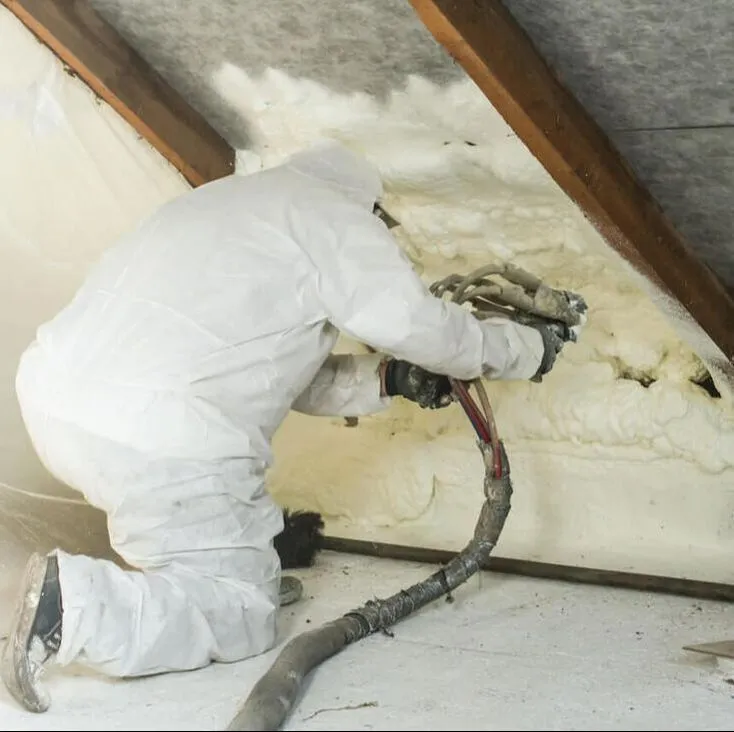
Commercial Spray Foam Insulation Houston TX: Open-Cell vs Closed-Cell
Choosing the right foam type is one of the most important decisions for any Houston building project. Both open-cell and closed-cell spray foam offer strong performance — but they work differently. Understanding those differences helps you pick the best fit for your building’s needs.
How Open-Cell Foam Works
Open-cell foam has a soft, spongy texture. Its cells are not fully sealed, which lets air pass through slightly. As a result, it expands aggressively — up to 100 times its original volume.
Key traits of open-cell foam:
- R-value: Roughly R-3.5 to R-3.8 per inch
- Best for: Interior walls, sound dampening, budget applications
- Moisture: Not a vapor barrier; needs a separate barrier in humid climates
- Weight: Very lightweight, ideal for wood-frame structures
Houston’s high humidity is worth noting here. Because open-cell foam absorbs moisture, it works best in climate-controlled interior spaces rather than exposed exterior applications.
How Closed-Cell Foam Works
Closed-cell foam is dense and rigid. Its cells are fully sealed, trapping an insulating gas inside. For this reason, it delivers much higher thermal resistance.
Key traits of closed-cell foam:
- R-value: Roughly R-6 to R-7 per inch — nearly double open-cell
- Best for: Rooflines, metal buildings, exterior walls, flood-prone areas
- Moisture: Acts as a Class II vapor retarder per ASHRAE standards
- Structural strength: Adds rigidity to walls and roofs
In fact, closed-cell foam can increase wall racking strength by up to 300%, according to research cited by the Spray Polyurethane Foam Alliance.
Side-by-Side Comparison
| Feature | Open-Cell | Closed-Cell |
|---|---|---|
| R-Value per Inch | ~R-3.7 | ~R-6.5 |
| Vapor Barrier | No | Yes |
| Expansion Rate | ~100x | ~30-40x |
| Cost Tier | Entry-tier | Mid-tier |
| Best Climate Use | Interior/dry | Humid/exterior |
Which Type Is Right for Your Houston Building?
For most Houston commercial projects, closed-cell foam wins on performance. However, open-cell foam still plays a valuable role in interior partitions and acoustic control. In our experience, many contractors use both — closed-cell on the roof deck and open-cell on interior walls — to maximize performance and value.
For a deeper look, visit our spray foam insulation overview or explore our closed-cell spray foam service page.
Houston TX Commercial Buildings That Benefit Most from Spray Foam
Not every building gains the same benefit from spray foam. However, certain commercial structures in Houston see dramatic results — especially given the city’s brutal heat, high humidity, and frequent storm activity.
Metal Buildings and Warehouses
Metal buildings are among the biggest winners. For example, a large warehouse with an uninsulated metal roof can see indoor temps spike well above 100°F in summer. Spray foam bonds directly to metal panels, stopping condensation and heat transfer at the source.
Key benefits for metal structures include:
- Condensation control — prevents rust and mold growth
- Thermal bridging reduction — metal conducts heat fast; foam stops it
- Air sealing — closes gaps around fasteners and seams
Learn more about options for these structures on our commercial metal building insulation page.
Restaurants and Food Service Facilities
Houston’s food industry runs kitchens that generate intense heat. In addition, health codes demand strict temperature control. Spray foam keeps conditioned air in and outdoor heat out — reducing HVAC strain and helping maintain safe food storage zones.
Medical Offices and Clinics
These buildings need stable indoor conditions year-round. Specifically, humidity swings can damage sensitive equipment and create mold risks. Closed-cell spray foam delivers both moisture control and a strong air barrier in one pass.
Retail Spaces and Strip Centers
Large open floor plans lose energy fast through ceilings and walls. As a result, HVAC systems work overtime. Spray foam cuts that load significantly. Buildings treated with spray foam often report energy savings of 20–40%, according to ENERGY STAR.
Cold Storage and Distribution Centers
Temperature-sensitive goods need consistent environments. Spray foam’s high R-value per inch makes it ideal for tight spaces where every inch of insulation counts.
Top building types that benefit most:
- Metal warehouses and distribution hubs
- Restaurants and commercial kitchens
- Medical and dental offices
- Retail strip centers
- Cold storage and refrigerated facilities
- Schools and municipal buildings
Why Houston’s Climate Makes the Difference
Houston averages over 100 days per year above 90°F, per NOAA climate data. Also, relative humidity regularly tops 70%. These conditions punish poorly insulated buildings. Spray foam handles both heat and moisture — something fiberglass batts simply cannot match at the same level.
For buildings with complex attic or crawlspace areas, our attic, wall & crawlspace insulation services offer tailored solutions.
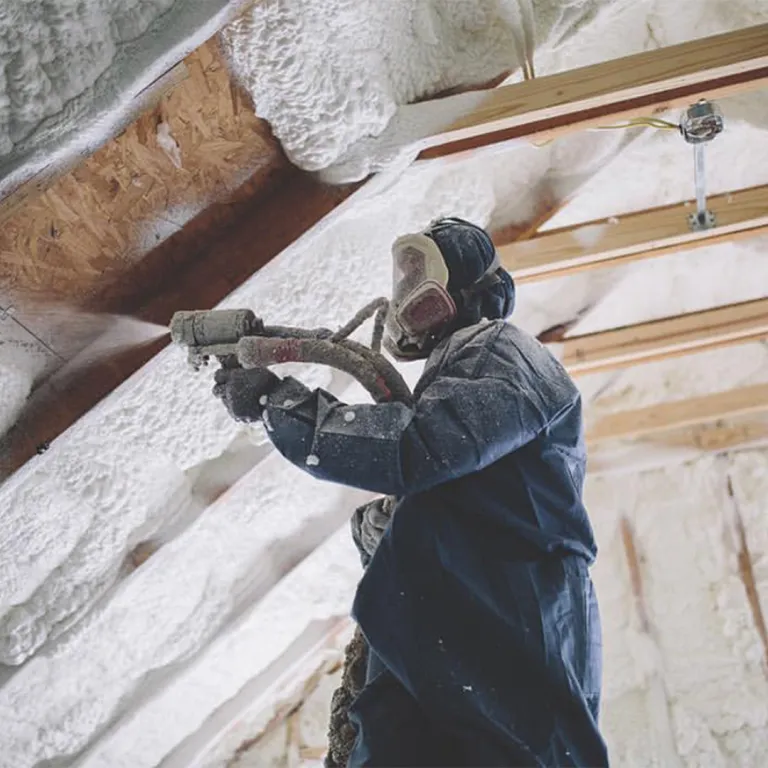
Commercial Spray Foam Insulation Houston TX: Cost Tiers & ROI Comparison
Understanding the investment behind spray foam projects helps building owners plan smarter. However, cost is only part of the story. The real question is: what do you get back?
How Projects Are Tiered
Spray foam insulation projects fall into clear investment tiers based on scope, foam type, and building size:
- Entry-tier: Small accessory buildings, storage units, or minor air-sealing jobs
- Standard-tier: Single-room or partial-floor open-cell applications
- Mid-tier: Full-floor open-cell or partial closed-cell work on mid-size commercial spaces
- Upper-tier: Large-footprint closed-cell applications for warehouses or retail buildings
- Premium-tier: Full building envelopes, metal structures, or multi-story commercial projects
For more detail on closed-cell options, visit our closed-cell spray foam service page.
What Drives ROI in Houston’s Climate
Houston’s heat and humidity are relentless. Because of this, HVAC systems work overtime — and that’s where spray foam pays off fast.
According to the U.S. Department of Energy, proper insulation can reduce heating and cooling costs by up to 15%. In Houston’s extreme climate, many commercial buildings report savings well above that benchmark.
Key ROI drivers include:
- Lower energy bills — Buildings consistently report meaningful reductions in monthly utility costs
- Reduced HVAC wear — Systems run less, extending equipment life by years
- Moisture control — Closed-cell foam resists humidity, cutting mold remediation costs
- Tax incentives — The IRS Section 179D deduction allows deductions for qualifying energy-efficient upgrades
Payback Timelines by Tier
| Project Tier | Typical Scope | Payback Window | Long-Term Benefit |
|---|---|---|---|
| Entry-tier | Small buildings, spot sealing | 1–2 years | Reduced drafts, lower bills |
| Standard-tier | Partial open-cell application | 2–4 years | Improved comfort, moisture control |
| Mid-tier | Full floor open-cell or partial closed-cell | 3–5 years | Significant HVAC load reduction |
| Upper-tier | Large warehouse or retail closed-cell | 4–6 years | Structural strength + energy savings |
| Premium-tier | Full envelope, multi-story or metal building | 5–7 years | Maximum ROI over 20–30 year lifespan |
Also, spray foam lasts 20–30 years with minimal maintenance. In contrast, fiberglass batts often need replacement within 10–15 years.
Making the Right Choice
Finally, always compare total lifecycle cost — not just upfront investment. For buildings with metal construction, premium-tier foam often delivers the fastest payback due to extreme thermal bridging in steel frames.
Customer Results: What Houston Businesses Are Saying
Real results speak louder than promises. Business owners who chose spray foam insulation report measurable gains — fast.
Energy Savings That Add Up
Houston’s heat is relentless. However, spray foam creates a tight thermal barrier that forces HVAC systems to work far less. Clients consistently report:
- 25–40% reductions in monthly cooling costs after installation
- HVAC equipment lasting longer due to reduced strain
- More consistent indoor temperatures, even during peak summer heat
- Fewer humidity complaints from staff and customers
Comfort and Air Quality Wins
In addition to lower bills, building occupants notice the difference right away. Specifically, drafts disappear, hot spots vanish, and moisture problems drop significantly.
According to the U.S. Department of Energy, air sealing alone can cut energy waste by up to 30%. Spray foam delivers both insulation and air sealing in one step.
Verified Client Feedback
Our testimonials page features real Houston-area clients sharing their outcomes. Also, check the Melissa J. Cypress TX review for a detailed commercial case study.
Results vary by building size and type — but the pattern is clear. Businesses save money, stay comfortable, and see ROI within a few years.
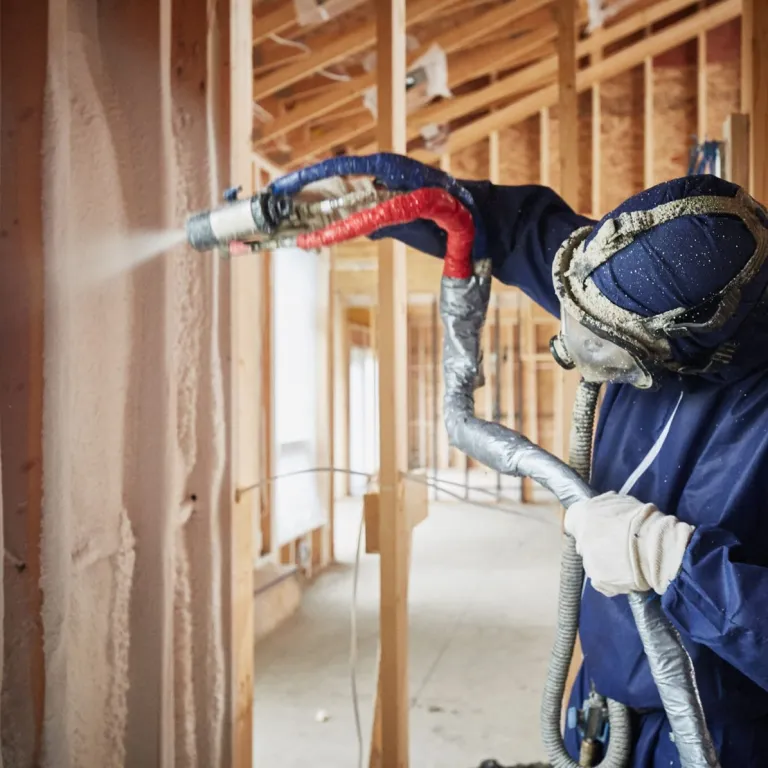
Get Started with Commercial Spray Foam Insulation Houston TX Today
Ready to upgrade your building’s performance? Spray foam insulation delivers long-term energy savings, moisture control, and structural strength — all in one solution.
Take These Simple First Steps
Getting started is straightforward. Follow this quick checklist:
- Schedule a building assessment with a certified spray foam contractor
- Review your energy bills from the past 12 months as a baseline
- Identify problem areas — roof decks, walls, and crawlspaces first
After that, a licensed contractor inspects your building, recommends open-cell or closed-cell foam based on your needs, and completes installation fast — most commercial projects wrap up with minimal downtime.
Houston’s humid climate makes acting sooner smarter. In fact, buildings with proper spray foam can save up to 40% on annual energy costs, according to the U.S. Department of Energy.
For details on foam types, visit our spray foam insulation page or explore our full services overview. You can also review our financing options to plan your project budget.
Don’t wait. Every month without proper insulation costs your business money. Contact us today and start saving.
FAQ
Conclusion
Houston’s heat, humidity, and storm risk make insulation a critical investment — not just a comfort upgrade. A poorly sealed warehouse or retail strip can bleed significant energy waste every year.
Spray foam solves multiple problems at once — it insulates, air-seals, and strengthens your building envelope in a single application. Moreover, it holds its performance for decades without sagging or settling.
If you’re ready to explore your options, visit our spray foam insulation services page or check out our closed-cell spray foam solutions. You can also read real customer testimonials from Houston-area property owners.
Therefore, choose a certified, licensed contractor who understands Houston’s unique building challenges — and get a solution built to last.