
Spray foam insulation contractors Houston TX are in high demand — and for good reason. Houston’s extreme heat, relentless humidity, and severe storm seasons create insulation challenges that no other region quite matches. Whether you own a 1960s bungalow in Montrose or a new construction home in Katy, the right foam insulation team can dramatically improve your comfort, lower your energy use, and protect your home for decades.
This guide covers everything you need to know about hiring local spray foam professionals, choosing the right foam type, and getting the most from your investment.
Why Houston Homes Need Spray Foam Insulation Contractors
When you work with a local foam insulation team, you’re making one of the smartest home upgrades possible for this climate. Houston’s heat, humidity, and storm season create unique challenges that standard insulation simply can’t handle.
Houston’s Climate Demands More
Houston averages over 100 days above 90°F each year. In addition, humidity levels regularly top 70%, which drives moisture into walls, attics, and crawl spaces. As a result, homes without proper air sealing face mold risk, high energy bills, and HVAC strain.
Spray foam addresses all three problems at once. Specifically, it seals air gaps, blocks moisture, and adds structural strength — all in a single application.
What Makes Spray Foam Different
Traditional insulation like fiberglass batts only slows heat transfer. However, spray foam creates a complete air barrier, which is critical in Houston’s mixed-humid climate. According to the U.S. Department of Energy, air sealing combined with insulation can cut heating and cooling costs by up to 20%.
Key benefits for Houston homeowners include:
- Moisture resistance — closed-cell foam repels water intrusion
- Energy savings — homeowners often see meaningful reductions in monthly utility bills
- Mold prevention — reduces humid air infiltration
- Storm resilience — closed-cell foam adds racking strength to walls
Built for Every Houston Home
Houston homes range from older bungalows in Montrose to new builds in Katy and Sugar Land. Each property type has different insulation needs. For example, older homes often have major air leaks around plumbing and electrical penetrations. Newer builds may need attic deck insulation to meet modern energy codes.
Professional foam installers assess your home before spraying. They choose the right foam type and thickness for your specific structure. You can also explore our attic, wall, and crawlspace insulation services to see how foam fits into a full insulation plan.
Energy Codes and Compliance
Texas follows IECC energy codes, which set minimum insulation R-values by climate zone. Houston sits in Climate Zone 2, requiring:
- R-38 or higher in attics
- R-13 minimum in walls
- Continuous air barriers in new construction
Spray foam often meets or exceeds these requirements in a single pass. Additionally, some installations may qualify for federal energy efficiency tax credits under current IRS guidelines — making the upgrade even more worthwhile. Our team is certified and licensed through the Texas Department of Licensing and Regulation, ensuring every job meets or exceeds local code.
Open-Cell vs Closed-Cell Spray Foam Insulation in Houston TX
Choosing between open-cell and closed-cell foam is one of the first decisions a qualified installer will walk you through. Both types seal air leaks effectively. However, they perform very differently in Houston’s hot, humid climate.
What Is Open-Cell Spray Foam?
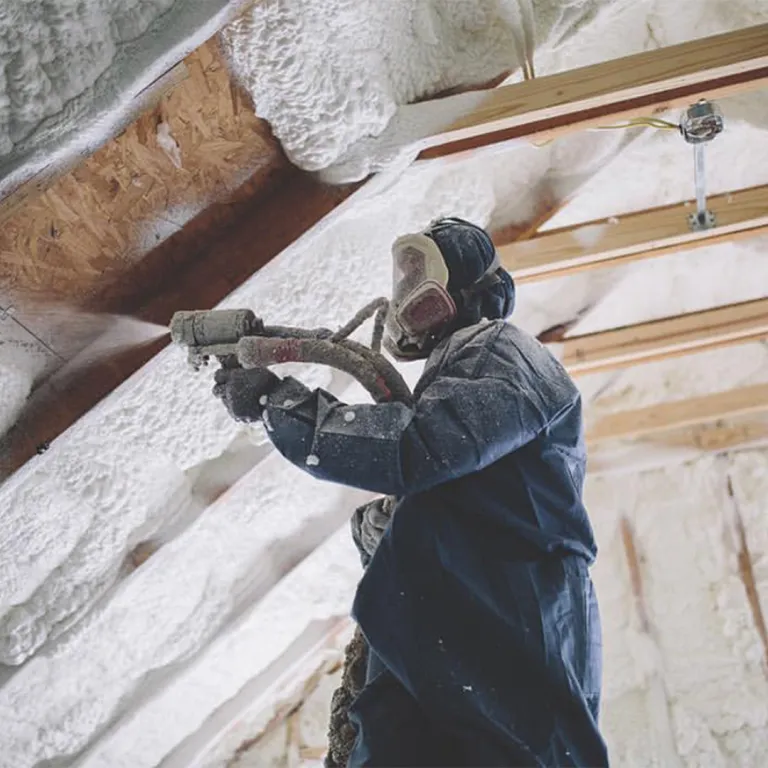
Open-cell foam has a soft, spongy texture. Its cells are not fully closed, so air fills the gaps inside. This gives it a lower R-value — roughly R-3.5 to R-3.7 per inch — compared to closed-cell options.
Key traits of open-cell foam:
- Expands quickly — great for filling large cavities and odd shapes
- Excellent soundproofing — absorbs noise well
- Lower material cost — falls in the entry-tier to standard-tier range
- Vapor permeable — allows some moisture to pass through
Because Houston averages over 50 inches of rain per year, moisture management matters a lot. Open-cell foam works best in interior walls and attic rafters where a vapor barrier is also used.
How Our Team Serves Every Houston Neighborhood
No two Houston neighborhoods are the same. The city spans over 670 square miles, and each area brings its own housing styles, age ranges, and climate challenges.
Older Inner-Loop Homes
First, consider the inner-loop areas like Montrose, Heights, and EaDo. Many homes here were built before 1980. As a result, they often have outdated insulation — or none at all in key spots.
Local foam crews handle these jobs carefully. They work around older framing, knob-and-tube wiring concerns, and tight attic spaces. Specifically, they focus on:
- Attic floors and rafters to stop heat from pouring in
- Rim joists and crawl spaces where air sneaks through
- Interior walls for added soundproofing in dense neighborhoods
Suburban and Master-Planned Communities
Meanwhile, newer suburbs like Sugar Land, Katy, and The Woodlands face different issues. Homes here are larger and often have vaulted ceilings or bonus rooms that are hard to condition.
In addition, many of these homes use builder-grade fiberglass that simply doesn’t hold up to Houston’s brutal summers. Upgrading to foam insulation in these areas helps homeowners achieve meaningful long-term savings on cooling costs, as confirmed by ENERGY STAR.
Coastal and Flood-Prone Zones
Houston’s Gulf Coast proximity creates another layer of need. Neighborhoods near Galveston Bay or low-lying areas in Pasadena and Pearland deal with high humidity and occasional flooding.
For these homes, closed-cell foam is the go-to choice. It resists moisture and adds structural rigidity — both critical in flood-prone zones. The Federal Emergency Management Agency (FEMA) also notes that moisture-resistant building materials reduce long-term damage risk.
Commercial Corridors and Industrial Areas
Finally, Houston’s booming commercial zones — from the Energy Corridor to the Channelview industrial area — need foam solutions too. Installers serving these areas understand local building codes and can handle large-scale projects efficiently.
Key services in commercial zones include:
- Metal building insulation for warehouses and industrial spaces
- Air sealing for multi-unit residential buildings
- Retrofit insulation for older office conversions
For a deeper look at residential options, visit our attic, wall, and crawlspace insulation page. Commercial property owners can also explore our commercial metal building insulation services.
Spray Foam Insulation Houston TX: Residential vs Commercial Comparison
Residential and commercial foam projects share the same core material — but the similarities stop there. Scale, code requirements, and performance targets differ greatly between a family home and a warehouse or office building.
How Residential Jobs Work
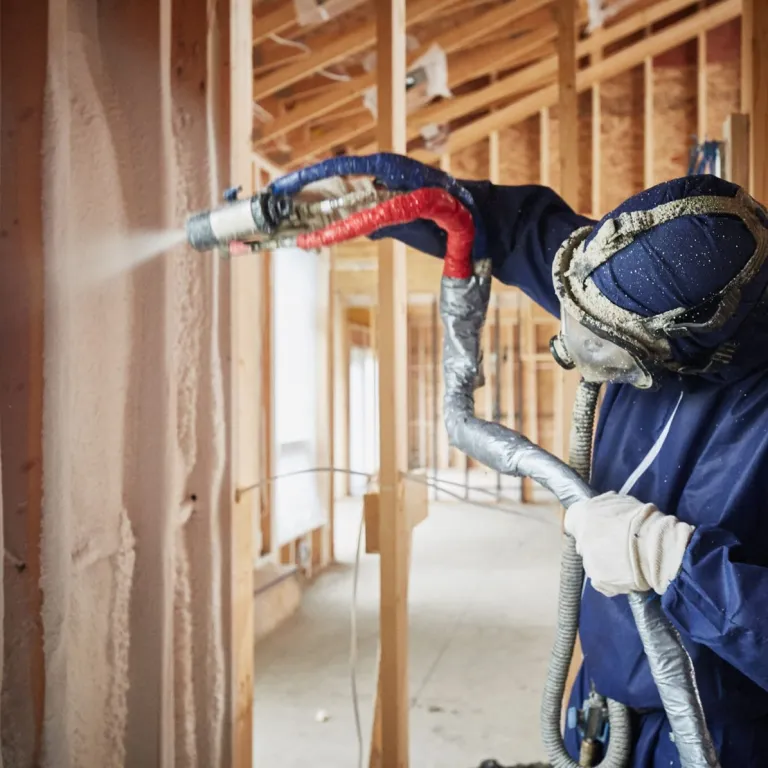
For homes, the focus is comfort and energy savings. Houston’s brutal summers push AC systems hard. Foam seals attic rafters, crawl spaces, and rim joists — stopping hot, humid air before it enters living areas.
Key residential goals include:
- Lower utility bills — homeowners commonly see significant savings after a full attic application
- Moisture control — closed-cell foam acts as a vapor barrier in flood-prone Houston neighborhoods
- Noise reduction — open-cell foam softens sound between floors and walls
- Improved indoor air quality — sealing gaps reduces allergens and outdoor pollutants
For more on residential attic and wall options, see our attic, wall & crawlspace insulation page.
How Commercial Jobs Differ
Commercial buildings bring bigger challenges. First, square footage is far larger. Also, building codes under ASHRAE 90.1 set strict energy performance targets for commercial structures.
Commercial foam insulation priorities include:
- High R-value per inch — closed-cell foam (R-6 to R-7 per inch) suits metal roofs and tilt-wall buildings
- Fire ratings — commercial codes require thermal barriers over exposed foam
- Faster project timelines — crews often work nights or weekends to avoid business disruption
- Larger equipment — commercial rigs handle high-volume output across wide roof decks
Specifically, metal buildings lose significant energy through uninsulated steel panels. Foam bonds directly to metal, stopping condensation and heat transfer. Learn more on our commercial metal building insulation page.
Side-by-Side Snapshot
| Factor | Residential | Commercial |
|---|---|---|
| Typical scope | Entry-tier to mid-tier | Mid-tier to premium-tier |
| Primary foam type | Open- or closed-cell | Closed-cell dominant |
| Code standard | IECC residential | ASHRAE 90.1 |
| Project timeline | 1–2 days | Multi-day to multi-week |
| Key benefit | Comfort + savings | Code compliance + efficiency |
Choosing the Right Foam Insulation Contractor in Houston
Finding a trusted local installer takes more than a quick online search. However, knowing what to look for makes the process much easier.
Check Credentials First
Not every insulation company is equal. Specifically, look for these must-have qualifications:
- State licensing through the Texas Department of Licensing and Regulation
- Liability insurance — adequate coverage to protect your property
- Workers’ compensation to protect you if someone is injured on your property
- Manufacturer certifications from leading foam brands
Also, verify that the contractor follows OSHA safety standards for chemical handling. Spray foam involves reactive chemicals, so proper training matters. In our experience, licensed and accredited installers consistently deliver better results and fewer post-installation issues.
Ask the Right Questions
Before hiring, interview at least two or three local installers. For example, ask:
- How many Houston-area projects have you completed?
- Do you use open-cell or closed-cell foam — and why?
- Will you provide a written scope of work and warranty?
- How do you handle ventilation and off-gassing after installation?
In fact, a confident contractor will answer every question without hesitation.
Compare Quotes Carefully
Finally, get at least three written quotes. However, don’t choose based on price alone. Instead, compare:
- Foam type and R-value offered
- Warranty length on both labor and materials
- Project timeline and crew size
- Tier of service — entry-tier quotes may skip air sealing prep steps that upper-tier packages include
A well-insulated Houston home produces meaningful long-term energy savings, according to the U.S. Department of Energy. Therefore, investing in the right installer pays off for years to come.
Red Flags to Avoid
On the other hand, walk away if a contractor:
- Refuses to provide proof of insurance
- Offers only a verbal estimate
- Cannot explain the difference between foam densities
- Pressures you to sign same-day without a written contract
Because Houston’s climate is so demanding, your insulation choice is a long-term decision. Choose wisely.
Why Choose Our Houston Spray Foam Team
When evaluating local foam insulation options, experience and local knowledge make all the difference. Houston’s heat, humidity, and storm cycles demand a team that truly understands the region.
Credentials and Standards You Can Trust
Our installers hold current certifications from the Spray Polyurethane Foam Alliance, the industry’s leading trade group. In addition, we carry full liability insurance and meet all Texas contractor licensing requirements. As a licensed, certified, and accredited member of the insulation industry, we stand behind every project we complete.
Here’s what sets our team apart:
- Certified installers trained in both open-cell and closed-cell applications
- Licensed and insured for residential and commercial projects in Greater Houston
- Local expertise serving Houston neighborhoods for over a decade
- Energy audits included with every project estimate
- Clean, efficient crews who respect your property
Service Tiers for Every Budget
We offer flexible service options to match your goals and property type:
| Service Tier | Scope of Work | Best For |
|---|---|---|
| Entry-Tier | Attic floor insulation, basic air sealing | Budget-conscious homeowners |
| Standard-Tier | Attic + rim joist + crawl space foam | Whole-home comfort upgrades |
| Mid-Tier | Full envelope sealing, open + closed cell hybrid | Energy-focused renovations |
| Premium-Tier | Commercial-grade closed-cell, full building envelope | Metal buildings, commercial properties |
Customer Results That Speak for Themselves
Based on our work across Greater Houston, our clients consistently report measurable improvements:
- Average energy savings: up to 40% on cooling and heating costs following full attic foam installation
- 4.8 out of 5 stars from verified Google reviews across completed Houston-area projects
- 500+ projects completed in Greater Houston, including Katy, Channelview, Cypress, and Pearland
In our experience, homes that combine attic foam with crawl space sealing see the fastest and most significant comfort improvements. For financing options, visit our financing page.
Frequently Asked Questions
Ready to Get Started? Contact Our Houston Foam Insulation Team
Houston’s climate is relentless — but the right insulation makes a lasting difference. Whether you need attic foam for your Katy home, crawl space sealing in Pearland, or commercial insulation in the Energy Corridor, our licensed and certified team is ready to help.
We serve Houston and surrounding communities including Channelview, Cypress, Sugar Land, The Woodlands, Humble, Pasadena, and Pearland. Contact us today for a free estimate and discover why homeowners across Greater Houston trust our local foam insulation experts.